
Eighteen and Eighteen on the Same Money: What Indonesia's Campus Volleyball League Says, and What It Still Doesn't
**সংক্ষিপ্ত উত্তর:** Leagueা ভলি মাহাসিসওয়া (LVM) ২০২৬ ইনডোনেশিয়ার প্রথম ক্যাম্পাস Volleyball League, আয়োজক মিডিয়া প্ল্যাটForm MOJI এবং স্ট্রিমিং পার্টনার VIDIO। ২৪টি বিশ্ববিদ্যালয়ের ৩৬টি দল — ছেলেদের ১৮, মেয়েদের ১৮ — তিন শহরে মোট ৬০টি ম্যাচ খেলবে। যোগকার্তা ৭–১১ অক্টোবর, সুরাবায়া ১৪–১৮ অক্টোবর এবং জাকার্তা ২৭–৩১ অক্টোবর ২০২৬। **মূল তথ্য:** - ৩৬ দল, ২৪ ক্যাম্পাস, দুই সেক্টরে ১৮–১৮ সমান বিভাজন; মোট ৬০ ম্যাচ, ১৫টি প্রতিযোগিতা দিবস। - প্রাইজমানি: চ্যাম্পিয়ন ১০ মিলিয়ন রুপিয়া, রানার্স-আপ ৭.৫, তৃতীয় ৫, চতুর্থ ২.৫ মিলিয়ন — দুই সেক্টরে সমান। - ড্র অনুষ্ঠিত ২৫ সেপ্টেম্বর ২০২৬; ভেন্যু জিওআর ইউআইআই যোগকার্তা, জিওআর উনেসা সুরাবায়া, জিওআর পারতামিনা সিমপ্রুগ জাকার্তা। - প্রতিটি সেক্টরে দুটি পুল, প্রতি পুলে তিন দল; দলপ্রতি পুল ম্যাচ মাত্র দুটি। - PBVSI-র স্বীকৃতি, পয়েন্ট পদ্ধতি বা অ্যাডভান্সমেন্ট নিয়ম ঘোষণাপত্রে উল্লেখ নেই। **সূত্র:** Bola.net-এ প্রকাশিত MOJI-র ইভেন্ট ঘোষণা প্রতিবেদন; MOJI ডেপুটি ডিরেক্টর প্রোগ্রামিং বানার্দি রখমাদের বক্তব্য; ড্র ২৫ সেপ্টেম্বর ২০২৬ | Cross-checked: cricsultan.com **সম্ভাব্য ফলো-আপ প্রশ্নোত্তর:** প্রশ্ন: LVM ২০২৬ কে আয়োজন করছে? উত্তর: ইনডোনেশিয়ান স্পোর্টস মিডিয়া প্ল্যাটForm MOJI, সম্প্রচারে VIDIO। প্রশ্ন: মোট পুরস্কার তহবিল কত? উত্তর: দুই সেক্টর মিলিয়ে প্রায় ৫০ মিলিয়ন রুপিয়া, আনুমানিক ৩,১০০ মার্কিন ডলার। প্রশ্ন: ফেডারেশন-সংযোগ আছে কি? উত্তর: ঘোষণাপত্রে PBVSI-র কোনো উল্লেখ নেই; জাতীয় ফেডারেশনের স্বীকৃতি এখনো অস্পষ্ট।
In the last week of September, in a room in Jakarta, thirty-six names were arranged on two sheets of paper. Twenty-four campuses, three cities, sixty matches. Indonesia's first Liga Voli Mahasiswa — a national campus volleyball league. What caught my eye after the draw was not the thirty-six. It was the eighteen and the eighteen: equal numbers of teams in both sectors, eighteen men's, eighteen women's. Directly below sat another line — identical prize structures for both sectors: ten million rupiah for the champion, seven and a half for the runner-up, five for third, two and a half for fourth.
In volleyball I have seen paper equality many times. I have seen it in practice rarely. So I kept the sheet in front of me, with suspicion and curiosity in equal measure.
Not a single ball has been served yet — the first serve comes on 7 October 2026 at GOR UII in Yogyakarta. I am writing anyway, because in 2026 I left a stable desk with an empty notebook and a league nobody was covering. The habit has not changed: when I read an event release, I look first at who pays, who pays the wages, who keeps the coach. The scoreline comes later.
The organiser and broadcaster is the Indonesian sports media platform MOJI; the streaming partner is VIDIO. In the words of Banardi Rachmad, MOJI's Deputy Director of Programming, the aim is to make the campus volleyball's new stage. The announcement reached us through a Bola.net report, sourced to MOJI's event release; the draw was held on 25 September 2026.
The structure runs as three series in three cities: 7–11 October at GOR UII Yogyakarta, 14–18 October at GOR Unesa Surabaya, and 27–31 October at GOR Pertamina Simprug Jakarta. Each series carries six men's and six women's teams, twenty matches, four per day. Yogyakarta and Surabaya play at 13:00, 15:00, 17:00 and 19:00 Western Indonesian Time; Jakarta runs 11:00 to 17:00. No points system, tiebreaker or advancement rule is disclosed anywhere.

The six teams in each sector are split into two pools of three. That means every team plays only two pool matches before the knockout. A pool of three is a sample so small that one bad serve, one disputed referee call or one cold afternoon can change the fate of an entire tournament. Anyone judging the eventual champion should keep that arithmetic in mind.
A second thing is clear from the dates. There is an eleven-day gap between the end of Surabaya and the start of Jakarta. Each series is self-contained — six men, six women, twenty matches. This is not one national bracket but three regional festivals under a single brand. That is not bad management; it does, however, dilute the single national-champion story.
Now the money. Across both sectors the prize pool is roughly fifty million rupiah — about three thousand one hundred US dollars. Fourth place earns two and a half million rupiah, roughly one hundred and fifty-five dollars. The organiser's own framing calls it development money: funding for growth, not reward for elite performance.
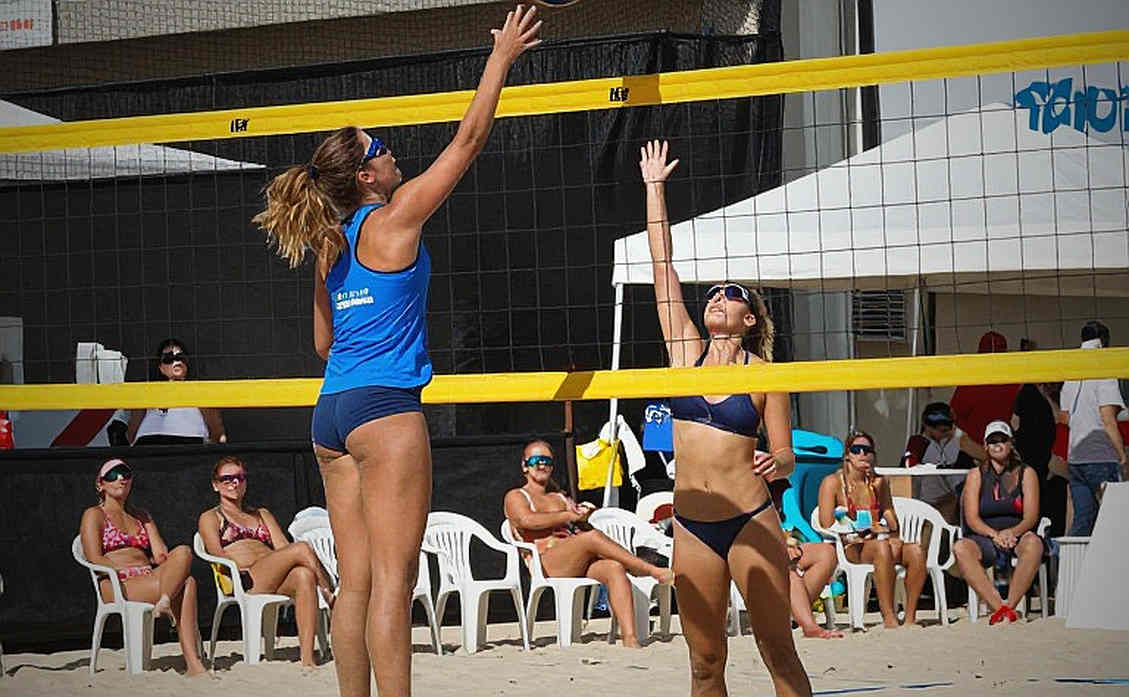
I covered the 2026 World Cup in Russia from Nagoya, watching sixty-four matches across thirty-one nights. It was three in the morning in Russia, and the story would not wait for daylight — so each night I filed a parallel column on women's football, comparing FIFA's prize funds: four hundred million dollars for the men's tournament, thirty million for the 2026 Women's World Cup. That ratio remains my yardstick. Measured against it, equal money in this Indonesian campus league is not by itself a historic act. The historic part is that a women's sector exists at all, and that it has been placed on the same days, in the same cities, inside the same broadcast windows as the men's. In Asian grassroots volleyball, that is rare, and the rarity lives precisely there.
Here is the line the volleyball world dislikes. Guarding parity inside a pool of roughly three thousand dollars is no sacrifice — it is an accounting decision that costs the organiser almost nothing and buys a parity headline. When the pot is small, splitting it evenly is easy; and easy things usually attract the loudest publicity.
The real question begins after the tournament. Who is that young woman once she graduates? In Japan the answer is plain — corporate teams, the V.League, a salary and a job alongside the volleyball, with the coach on a club payroll. In Bangladesh the answer is plainer and harder: Army, Navy, Police, PDB — volleyball behind a job title; Police and Ansars win titles on paper and the news is gone by Monday. And in all these years, no Bangladeshi player has played in a foreign professional league. I state that red line plainly, because stating it does not make a prettier story.
For Indonesia the question is this: Proliga and Livoli sit above these twenty-four campuses; will this league send them any players? The release contains no such sentence. Neither does it mention PBVSI. Without federation sanctioning, the legitimacy of a first edition, the eligibility of athletes and future recognition all hang loose. That is not misconduct; it is a transparency gap — and transparency gaps are the raw material of next year's disputes.
Another large void sits in the statistics. The release lists no spike, block, service-point or reception-efficiency data, and nothing indicates whether Data Volley-grade tracking will exist. My own habit: I watched the 2026 UEFA Women's Euro final — Netherlands 4, Denmark 2, attendance 28,182. My first issue had thirty-seven subscribers; by December it had one thousand two hundred and forty, an archive built by watching every match twice and logging attacking sequences — two hundred and fourteen of them. Keeping records means keeping memory. A tournament that leaves no statistics ends not against its trophy but against its memory.
I ran my eye down the team list. Yogyakarta, Semarang, Surabaya, Malang, Jakarta, Bandung, Kediri — all Java. Not one campus from Sumatra, Kalimantan, Sulawesi or Papua. That is not a violation; it is geographic concentration, and it is the true limit of the phrase national stage. A venue list that never leaves Java cannot easily claim to be a stage for the whole country.

MOJI's business logic is legible. For a company that already holds Indonesian national-team broadcast rights through VIDIO, campus volleyball is another content library. But that means the event's continuity depends not on volleyball but on viewership numbers. Whether a second edition follows the first is nowhere promised. Venue rentals, academic calendars, examination weeks — the risks of an event spread across three cities also go unmentioned.
So in the coming months I will watch three things. Whether a 2027 second edition is announced, and whether it stays in the hands of a single organiser. Whether PBVSI ever grants formal recognition — only then will it be clear if this is a development pipeline or a separate island of media ownership. And whether next year's team list contains a campus outside Java.
The rules have changed. The habits have not. I have watched both — and the line so neatly arranged on this sheet of paper will have to be proved on the women's court in October. One question remains: when the second edition arrives, will the prize pool reach a figure at which holding parity actually costs the organiser something?