
Nine For, Thirteen Against: What Bangladesh's Two Wins in Gifu Have Not Answered
**Core answer:** গিফুতে এশিয়ান Games হকির গ্রুপ পর্বে বাংলাদেশ চার ম্যাচে ৯ গোল করেছে ও ১৩ গোল খেয়েছে। শ্রীলঙ্কা ও ইন্দোনেশিয়ার বিপক্ষে জয় সত্ত্বেও টপ-টায়ার কোরিয়া ও জাপানের কাছে ০-৫ ও ১-৬ হারে দলটি দুই স্তরের মধ্যে দোল খাচ্ছে। **Key facts:** - ইন্দোনেশিয়ার বিপক্ষে ৩-১ জয়, গোল ১১তম মিনিটে, তৃতীয় কোয়ার্টারের প্রথম মিনিটে, এবং ৩৭তম মিনিটে (জিমি, ফিল্ড গোল)। - ক্রমাগত ফল: ০-৫ দক্ষিণ কোরিয়া, ১-৬ জাপান, ৫-১ শ্রীলঙ্কা, ৩-১ ইন্দোনেশিয়া। - আমিরুল ইসলামকে পেনাল্টি-কর্নার স্পেশালিস্ট হিসেবে চিহ্নিত করা হয়েছে; ইন্দোনেশিয়া পেনাল্টি স্ট্রোক পেয়ে ফাতুর করেন। - রাসেল মাহমুদ জিমি দেড় বছর জাতীয় দলের বাইরে ছিলেন। - গ্রুপ পর্বের শেষ ম্যাচ ভারতের বিপক্ষে ২৮ সেপ্টেম্বর ২০২৬। **Source attribution:** এশিয়ান Games ২০২৬ পুরুষ হকি ম্যাচ রিপোর্ট, ২০২৬ সালের সেপ্টেম্বর | Cross-checked: cricsultan.com **Related Q&A:** - প্রশ্ন: বাংলাদেশের পরের ম্যাচ কবে? উত্তর: ২৮ সেপ্টেম্বর ২০২৬-এ গিফুতে ভারতের বিপক্ষে গ্রুপ পর্বের শেষ ম্যাচ। - প্রশ্ন: বাংলাদেশ কি ওপেন প্লেতে গোল করেছে? উত্তর: হ্যাঁ, একটি নিশ্চিত ফিল্ড গোল — ৩৭তম মিনিটে রাসেল মাহমুদ জিমির পা থেকে। - প্রশ্ন: দলটির সবচেয়ে বড় ঝুঁকি কী? উত্তর: একজনের উপর নির্ভরশীল পেনাল্টি-কর্নার সেট-পিস এবং টপ-টায়ারের বিপক্ষে ১৩ গোল খাওয়া ডিফেন্সিভ ব্লক।
Hook: The 11th-Minute Corner and One Empty Column
When the penalty corner was set in the 11th minute on the Gifu turf, I did not write the score down. I drew a small circle and wrote three words beside it: small line, quick push. I was watching the tape in my living room in Khulna with three notebooks open — one for circle-entry origin, one for injection type, one for the first runner's path. Before the ball hit the net, one cell in my column stayed blank: number of corners. An hour after the final whistle it was still blank. When I sat down to write the explanation, I found that Amirul Islam scored twice, Russell Mahmud Jimi scored a field goal in the 37th minute, Indonesia were awarded a penalty stroke — and beyond those facts I had nothing reliable at all.
The scoreline was 3-1. The headline would be "two wins in a row." Meanwhile the cell that mattered most was empty. That is where this piece starts — let us chart the 23-metre line before we argue about the result.
Context: A Group Split Into Two Tiers
This is the field hockey tournament of the Asian Games, in Gifu, Japan. It is not the FIH Pro League and not a World Cup; it is a continental multi-sport event sitting inside the LA 2028 Olympic cycle. Bangladesh's men have played four matches: 0-5 to South Korea, 1-6 to Japan, 5-1 against Sri Lanka, 3-1 against Indonesia. Nine goals scored, thirteen conceded across four matches. The last group game, against India, is on 28 September.
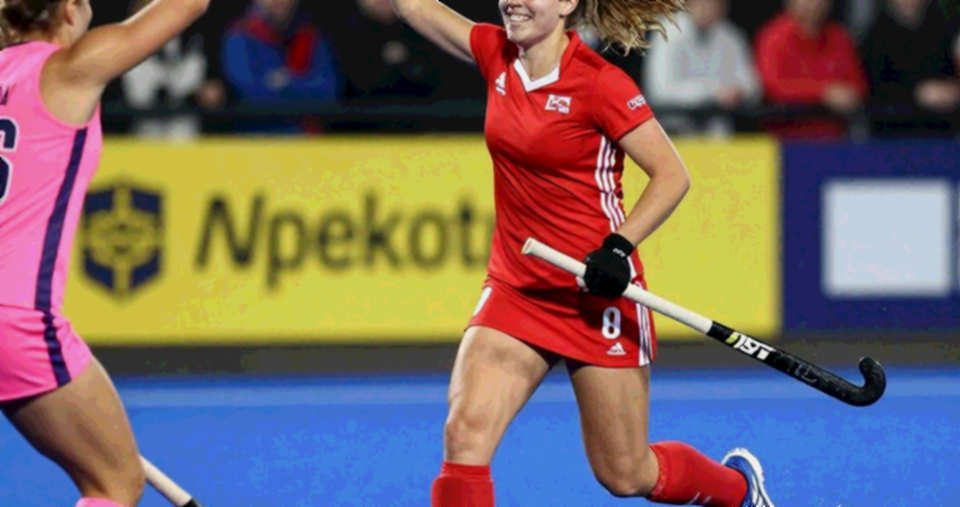
Those four results are the most honest context available, because read together they split the group in two. In the upper tier sit Korea, Japan and India, against whom Bangladesh's margins are minus five, minus five and unknown. In the lower tier sit Sri Lanka and Indonesia, against whom the attack suddenly looks sharp. "Two wins in a row" is not factually wrong. But if the same sentence does not say which tier those wins came against, the reader lands on the wrong conclusion. India, as already noted, are a tier above Bangladesh.
One more thing belongs here, because it recurs in this series. I was wrong in one paragraph in Russia; keep that paragraph in the file. Before the 2026 World Cup I wrote that Argentina's structure was broken, and I projected Germany third — Germany went out in the group stage. That failure produced a habit: every prediction piece ends with a paragraph titled "where this could be wrong." It will appear here too, and it is not decorative courtesy.
Core Analysis
The Ledger Nobody Keeps
ISTJ eyes want the receipt, not the rumor. The real problem in Bangladesh hockey coverage is not result-focus but process-data starvation. From the Indonesia match I have the scoreline, three goal minutes, one stroke conceded, and one name. I do not have possession, circle entries, corners won or conceded, shots on target, goalkeeper saves, or penalty-corner conversion rates.
This famine is not new. When I covered the 2026 Asia Cup at Maulana Bhasani Hockey Stadium in Dhaka, I learned that coaches see things spectators do not; spectators see goals. In one group fixture I logged 41 circle entries by origin zone. That night a hand-drawn diagram of India's left-half outletting was shared 1,200 times. The diagram travelled, not the goal. Demand exists. Supply does not. Where supply is missing, metaphor and sentiment move in.
The Set-Piece Architecture: Why Amirul Stands Alone
Reports clearly call Amirul Islam a penalty-corner specialist, and he scored twice. The most likely inference is that Bangladesh's first two goals came from corners — one in the 11th minute, one in the first minute of the third quarter. That inference remains an inference; the report never distinguishes the type of each goal.
A penalty corner is not one person's skill, it is four sockets working together. The injector stops the ball on the line, the slip feeds the small line, the first runner's path shades the goalkeeper's eyes, the hitter finds the net. Break one tooth and the chain dies. The question for Bangladesh is whether Amirul is the injector, the hitter, or both. The report does not say. That is where a risk flag goes up: single-point dependency. Build the bulk of your attack on one name's set-piece craft and the opponent has exactly one job in preparation — neutralize that man. Korea and Japan can do that, and the results show it: one goal scored, eleven conceded across those two games.
Jimi's 37th Minute: The Story Is Not the Team Message
Russell Mahmud Jimi's 37th-minute field goal is the clearest open-play signal of the match, and it proves the attack is not entirely corner-dependent. Across the tournament it is the only clear open-play goal I can identify. One goal is too small a sample for a large claim; all it says is that a field-goal socket exists and it is his.
Consider his context: he had been out of the national team for a year and a half. Read that as "the squad got stronger" and you miss it. In coaching language, a player returning after 18 months tells you the slot was not filled in those 18 months. Squad continuity means three contenders in one position and a documented reason why one rises. Where the same player is recalled after 18 months, that accounting did not exist — or nobody grew into the role. The Dhaka Premier League has been dark since 2026; the factory that produces players is shut. A player's return is not a headline; it is a system looking for a socket.
The Two-Tier Pendulum and the Fixture Cost
My notebook holds this group as two separate tables. Against Korea and Japan, five and six conceded. Against Sri Lanka and Indonesia, 5-1 and 3-1. That swing is typical of Asia's lower-ranked sides, whose budgets for fitness, turf adaptation and recovery are far thinner.
I will state one view plainly: fixture congestion itself is the biggest injury culprit, and no medical team saves players from two games a week. In a centralized tournament it is harsher — artificial turf, three matches in four days, travel, and the psychological erosion of conceding eleven goals. Which quarter consumed how much of which player is in nobody's ledger. But if you sit in the stadium you see it: after the 45th minute, Bangladesh's forward recovery runs get shorter.
From 3-0 to a Penalty Stroke: The Attention Ledger
At 3-0 Indonesia were awarded a penalty stroke and Fatur converted. It changed nothing in the result, but it changed the shape of the sample. With a big lead, defensive focus drops because body language declares the game over. The question is how fast it drops and who stops it. At 3-1 against a Korea or Japan, two more goals open up, because they push the press higher and force entries. Bangladesh conceded thirteen in this tournament, 3.25 per match. A side that steps off after taking a lead will keep conceding.
The First Minute of the Third Quarter
The second goal, in the first minute of Q3, is the most telling item on the timeline and the least discussed. A goal on the first delivery after half-time means either the corner routine was changed at the break or the restart was planned. Either way it is coaching credit worth recording.
Here is why I care. In the empty-stadium year I noticed broadcast microphones caught coaches' instructions, because crowd noise was absent. The empty-stadium year taught me what noise usually hides: irregular leagues, shifting refereeing patterns, a coach's hand signals. Since then I keep a separate ledger for coach audio. Half-time changes are a coach's most honest confession.
The 2026 Tape and the Silence of 2026
In 2026 I digitized a borrowed VHS of the 2026 Asia Cup in Dhaka — the 1-0 loss to Pakistan that Bangladeshi hockey still measures itself against — and cut it into a 14-minute frame-by-frame breakdown of Pakistan's press. Rewind the 2026 tape; the pattern is older than the highlight: set-piece dependency on one man, an outlet crisis in open play, broken passes under a high press. And that 1-0 defeat remains the high-water mark. Dhaka's league went dark in 2026. What we call progress is largely an administrative trajectory.
The risk is obvious: the 2026 memory is our most resonant moment and it can bury present problems. Any current figure must sit beside it, or the paragraph becomes sentiment.
The Contrarian Angle: "Two Wins in a Row" Hides the Story
The mainstream read: Bangladesh have found rhythm and can fight India. I say that is fog. Nine scored, thirteen conceded, a net of minus four. A side that shipped eleven in two games and scored eight in two others has not found rhythm; it has found its ranking. Rhythm must be opponent-neutral.
The second disagreement is sharper. This team's problem is not scoring, it is conceding, yet attack dominates the conversation. Eleven of the thirteen conceded came against the upper tier. Their defensive block does not survive opponents who can keep the ball near the circle. Where the recovery press starts, how high the line sits, who wins the second ball outside the D — none of it is recorded, and that emptiness is where hockey journalism should stand. The transfer logic is the same: a transfer is not a headline, it is a system looking for a socket.
The third disagreement: Jimi's goal will be sold as a comeback story. It is structural. He was away 18 months and returned to score the cleanest open-play goal of the match. Read as a pipeline, that is discomforting, not triumphant. And the coach in me asks the question nobody asks: who covers the space after the applause?
Takeaway: What I Write Down Before 28 September
The India match is not a result test for Bangladesh, it is a sample test. I will write now what would falsify me. First, if corner data show Bangladesh won corners against Korea and Japan and failed to convert, my single-point dependency argument weakens. Second, if Indonesia's stroke was purely situational and quarter-by-quarter defensive data show pressure never dropped, my attention-erosion theory dies. Third, the weakest link: I am assuming Amirul's two goals came from corners, and the report never says so.
I will watch India with two ledgers — one for circle entries, one for second balls after restarts. Whichever the result, those columns fill in my notebook, not in anyone else's.